
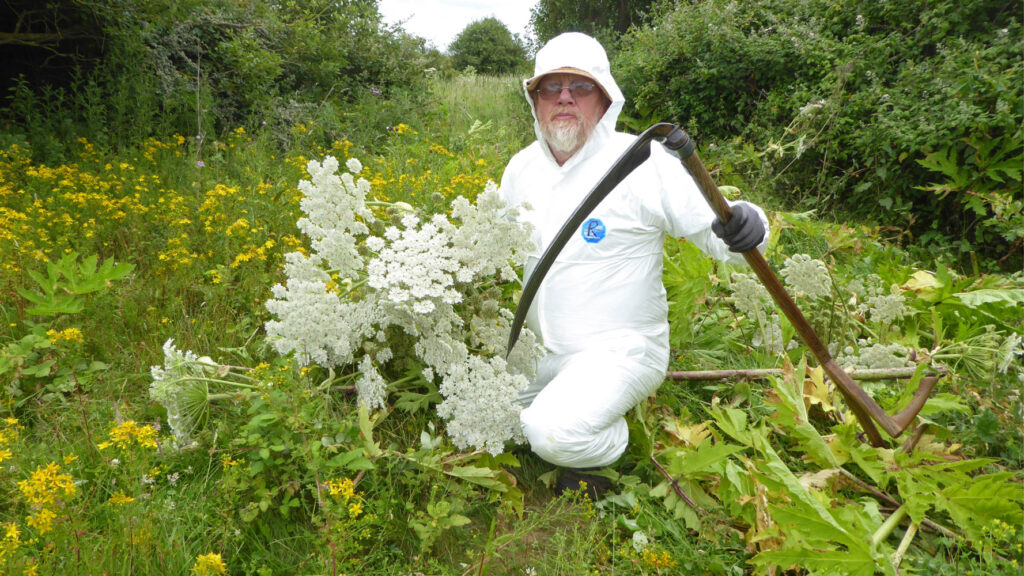
The following is an account of my attempts to control the invasive alien weed Giant Hogweed in a small nature reserve I manage in Norfolk – using a scythe as a key component of an integrated management strategy
One, two! One, two! And through and through
From “Jabberwocky” by Lewis Carroll
The vorpal blade went scnicker-snack*!
He left it dead, and with its head
He went galumphing back.
Scnick verb : to slice or sever with a scythe
* I have added the letter ‘c’ here to snicker-snack to create an onomatopoeic verb “to scnick” : to slice or sever with a scythe (as opposed to with a ‘snickersnee’ = a large sword-like knife, especially one used as a weapon). Pronounce as Schnitz (cut, slice – as in Schnitzel), and as the sound of a scythe blade slicing through vegetation.
Giant hogweed (Heracleum mantegazzianum) is a truly magnificent plant that can reach 10 feet (3 metres) or more in height with individual leaves that can be over 3ft (1 metre long).

It has massive white flower heads in flat topped clusters arranged like an umbrella (called ‘umbels’). These are a magnet to pollinating insects such as bees and hoverflies. It is however, not a British native plant but an ‘alien’ invader. It was introduced to Britain from Russia via Kew gardens in 1817, and quickly became popular with large estate gardens as a monumental curiosity.
Unfortunately, Giant Hogweed turned out to be a bit of a monster, a triffid if you like! Within ten years of its introduction to gardens it had escaped into the wild. It produces seed prolifically which can travel long distances floating along rivers and streams. It has since spread as an alien weed all around Britain and is a problem weed in many other parts of Europe and America too.
Pingback: Autumnal Aftermath - Wild Scythe