
Himalayan balsam (Impatiens glandulifera) was introduced into Britain from the Himalayas in 1839 as it is quite an impressive and attractive plant. It is now an invasive weed of riverbanks and ditches where it is regarded as a problem weed as it prevents native species from growing in summer and dies away in winter leaving bare soil vulnerable to erosion.
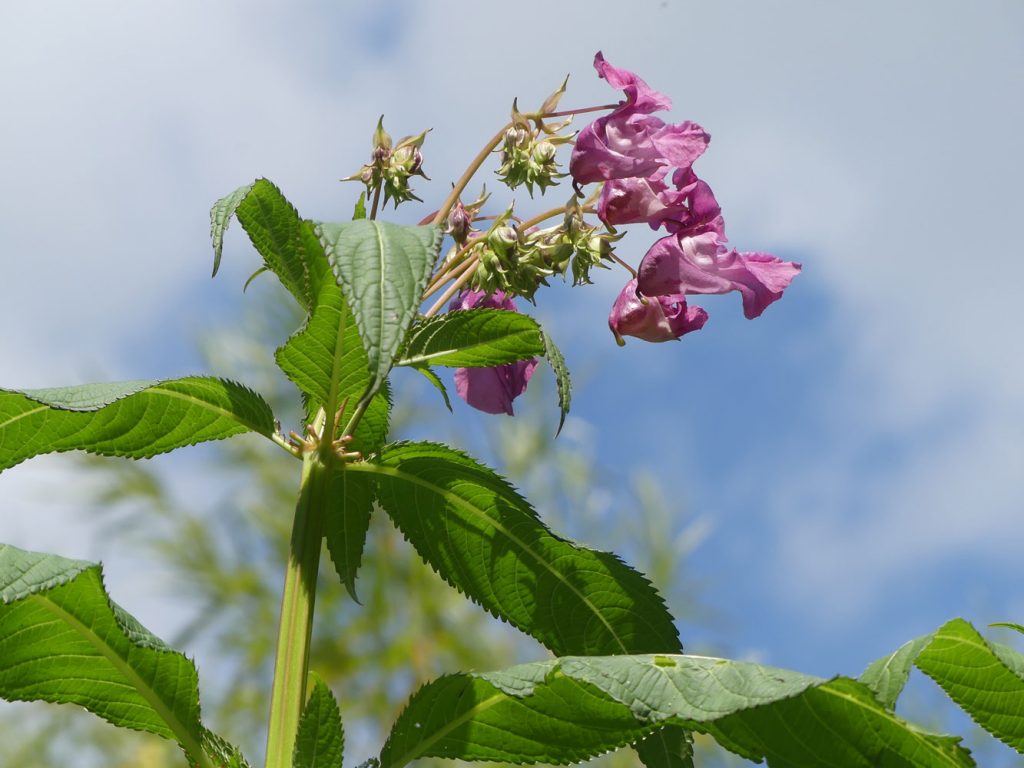
Himalayan Balsam is an annual plant. It germinates in early spring. It is very fast-growing, potentially reaching over 2 meters in height by June. It can out-compete most native plants (even nettles!)
It flowers and sets seed prolifically from July to October. Its explosive seed pods aid its dispersal by sending the seeds into the river, causing further spread downstream. Most seeds overwinter before germinating the following spring. There is some evidence of some seeds remaining un-germinated as a persistent seedbank lasting for at least 2 -3 years.
Control Strategies
As an annual plant the main aim of any control program will be to stop any balsam plants completing their life cycle and setting any seed to perpetuate the problem or allow it to spread.
The three main approaches to removing Himalayan balsam are: chemical, hand pulling (uprooting) and cutting.
Only the latter (naturally using scythes), is under consideration here!
In 2024 I was asked to participate in a project to demonstrate the efficacy of Balsam control using scythes with volunteers along sections of the Wreake river Valley in Leicestershire. This was part of a DEFRA funded ‘Invasives to Natives’ INNS project run by Leicester County Council. I was engaged to provide advice, equipment and training for volunteers and students at Brooksby College.
We targeted sections of river bank on two separate occasions spaced a month apart in May and in June to assess the difference the timing of cut had. Each cut area was followed up over ensuing weeks to assess the results and deal with any recovery (as any plant that managed to regrow and shed seed would undo all the good work).
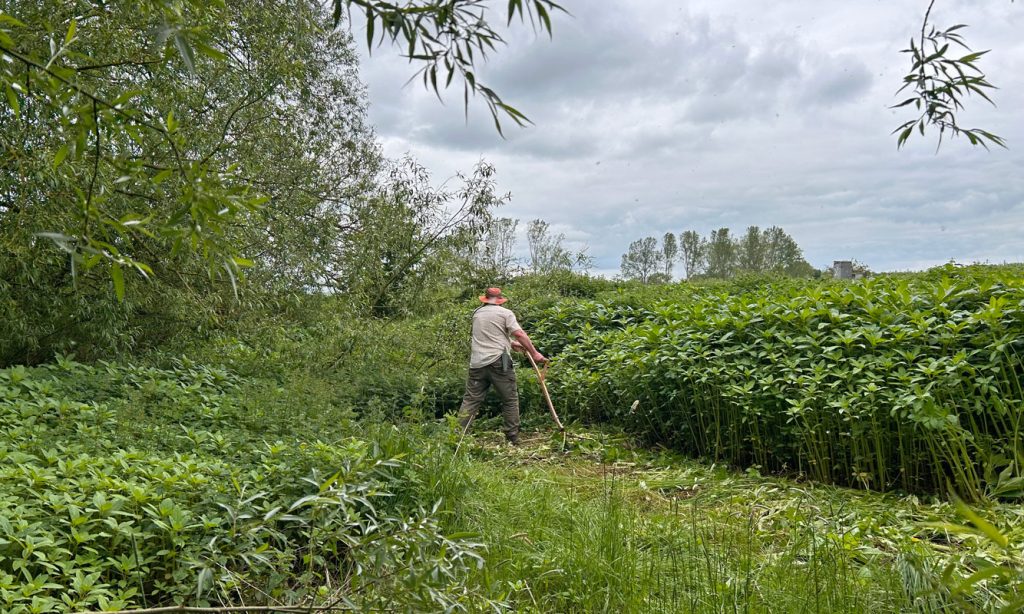
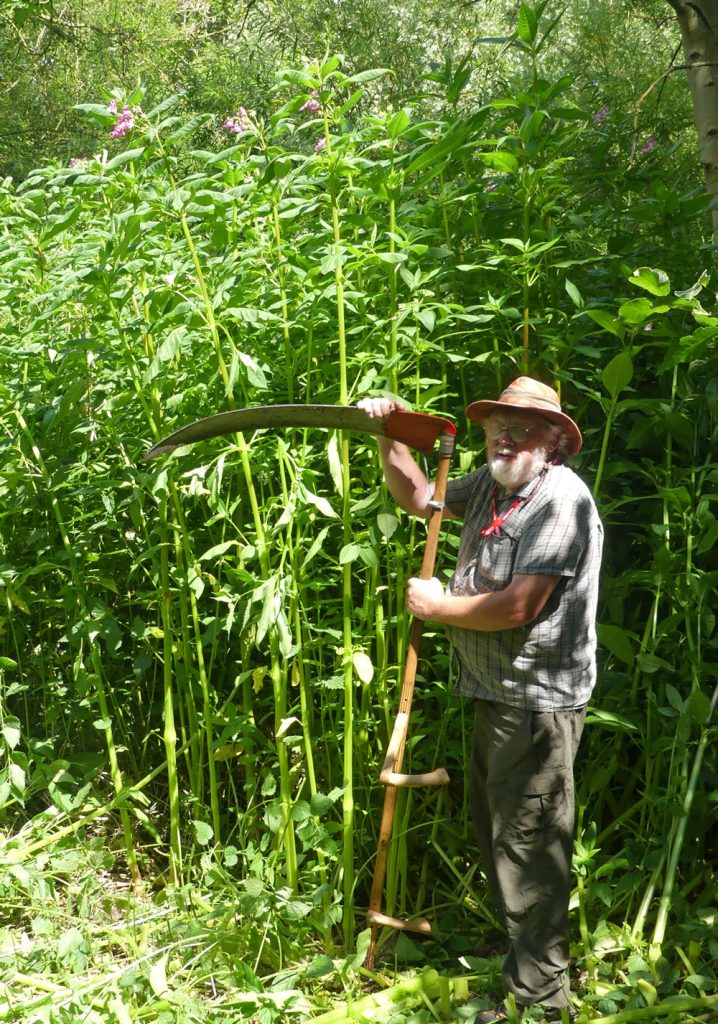
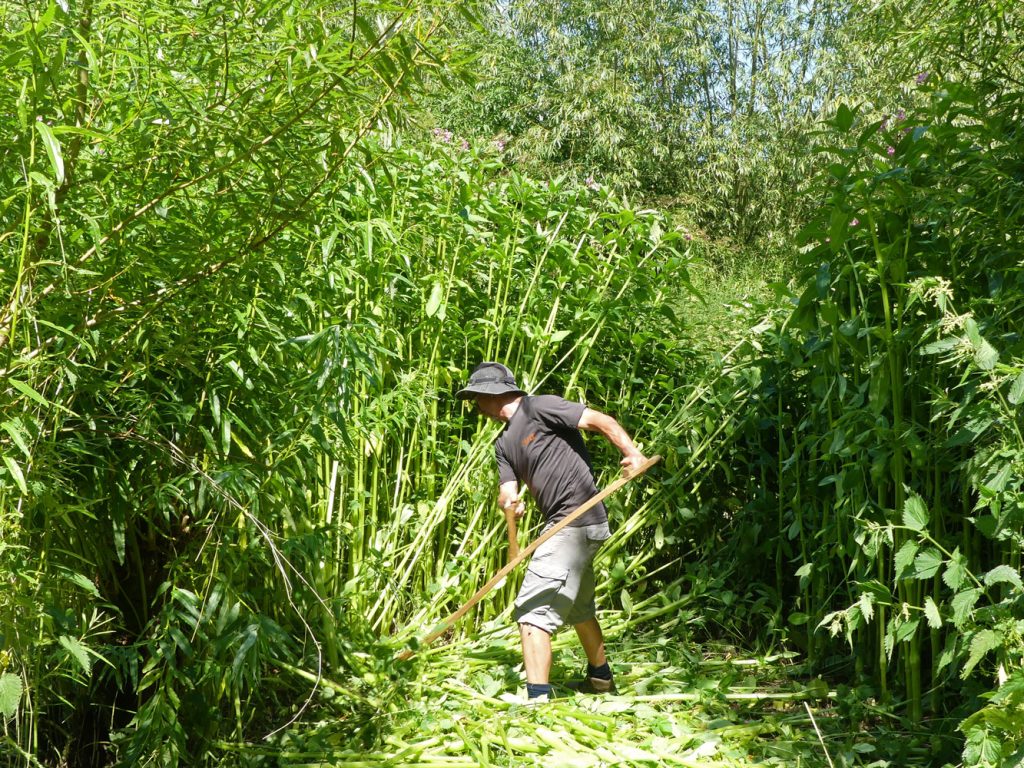
Whilst I have given advice on Balsam control a number of times over the years, this was my first ‘hands on’ experience mowing balsam. It is great fun! The succulent hollow stems of these impressive plants yield so easily to the scythe even when fully grown -most satisfying! Landing the two-meter giants neatly to ones left is slightly trickier, especially if entangled with stinging nettles!
I started out with a standard 65cm Styria ditch blade but quickly stepped up a few gears to use my longer 90cm ‘munching’ blade with a fairly deep (but not heavy) body. I normally use this for quickly munching through succulent nettle and hogweed stands. I can set it up with a fairly wide hafting angle if the mowing is easy, and I have fitted a grass nail to stop tall nettle stems getting caught in the elbow by the beard.
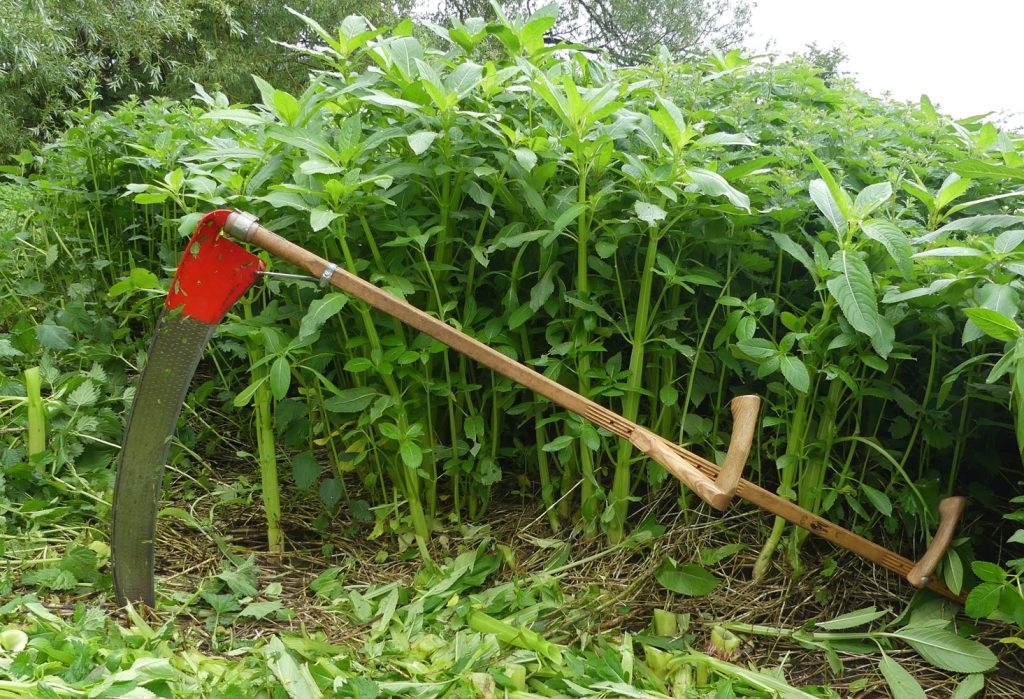
The students all did well with 65 ditch blades, especially given the uneven terrain. Their college lecturer confessed that he had had a long career teaching horticulture and land management with grass cutting machinery, but had never thought to try a scythe before. His comment after using my scythes as a novice himself was “I thought the scythes with the 65cm blades were pretty impressive, until I had a go with the 90cm beast which was truly amazing!”
Practical Conclusions from the project for Balsam control
Scything works!
The use of scythes as part of a programme of Himalayan Balsam management appears to be 90%-95% effective.
Although hand-pulling may be more than 95% effective, even inexperienced mowers with basic training can cover a lot more ground with a scythe.
The more inaccessible areas of growth, on steep riverbanks and boggy woodland for example, can be reached with a scythe more quickly than attempting hand-pulling, and more safely than using mechanical brush cutters.
timing
Balsam cutting can be effective from May until just before the first potential seed set in late June. (Earlier cutting is said to promote bushy regrowth with potentially more flowers and seed production than uncut stands, so was not tested).
Scythes can tackle plants of all sizes, but it is more efficient to cut when the plants are still around 500mm to 1000mm tall. This means that stalks are robust enough to respond well to the scythe, but also reduces the overall amount of cut foliage produced.
In practice however, except in small target areas, a control work programme will need to keep cutting throughout the short period of growth ahead of seeding.
Aftermath
Leaving cut Balsam where it falls, spread out and exposed to direct sunlight, withers quickly and dies with little or no chance of the cuttings rooting. This avoids the arduous task of raking off and issues of disposal (as it becomes controlled waste if taken off site).
Balsam doesn’t like dry conditions. The exposed soil surface after cutting dries out quickly and so becomes less hospitable to fresh germination and regrowth.
As the balsam plants are no longer providing their own shade protection for roots, the rooted cut stumps also mainly die. Plants that were successfully severed below the first stem node were certain to die.
Even where the stems were cut above the first shoot node, (as result of uneven terrain (river dredging spoil heaps), obstructing debris (twigs and branches from trees) and newly trained volunteers) a 95% success rate was still observed.
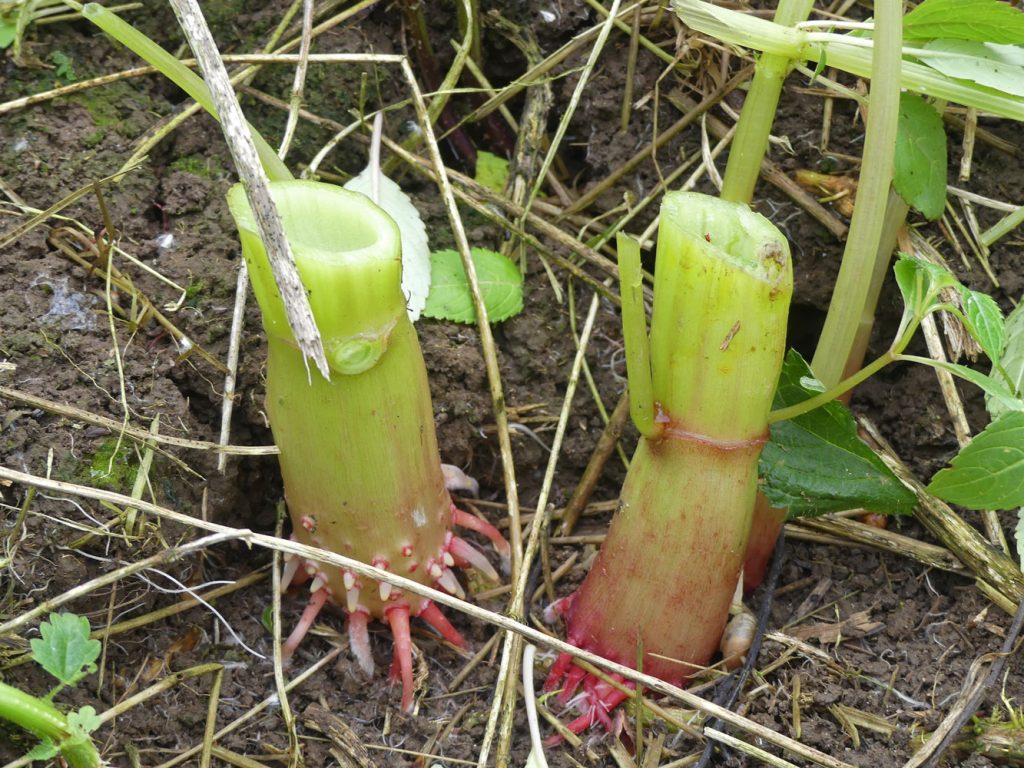
With minimal recovery it is very quick and easy to revisit a previously cut site to pick off any regrowth, new growth or missed plants.
Pulled Balsam plants with roots attached by comparison have the potential for re-rooting if roots are covered, lay on a damp surface, or are piled into damp heaps. (removal offsite is generally not an option for reason of biosecurity).
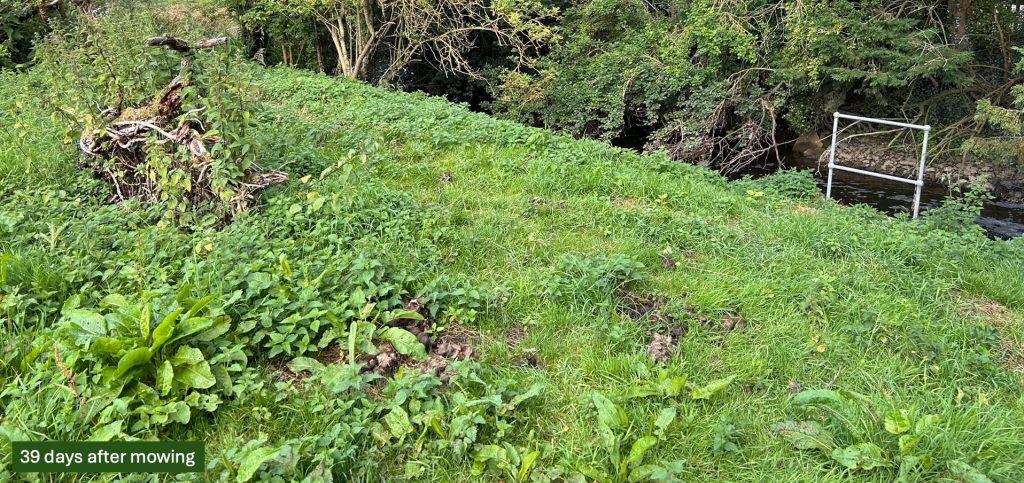
On some sites removal of the shading from the growth-suppressing balsam canopy allowed recovery of lower growing native perennial herbs and grasses. This healthy perennial ground cover will help suppress balsam germination in following years.
Control Program planning
The size of the area that can be tackled with scythes will be limited by the number of available trained scythe volunteers.
This scheme had 10 kilometres of river banks: more than could be tackled in one season with a cutting window of only six to eight weeks before seed set.
It is important to start up river and eliminate balsam here first to avoid reinfection from balsam stands still growing upstream and sending fresh seeds down stream.
Control sites need monitoring to mop up survivors both in the weeks after cutting, but also in following few years as seed may persist in the soil to re-emerge for 2 -3 years or more.
With thanks to Phil Whetter (Scyther) for his support on the courses, monitoring and feedback on the project, and for his report which formed the basis of this post. Also Roseanna Burton from Leicester County Council who coordinated the project and Alex Gray at Brooksby College.
Very interesting. I’ve always advised pulling HB but now I’ll refer to your excellent article.
At Watermead Park in Leicester last week we determined that a combined strategy of cutting and pulling would be most efficient. Scythes first to clear big areas quickly followed up by pulling any remaining, either missed or awkwardly growing amongst low hanging tree branches
An excellent approach in general, to which a few points could be added:
1. The emerging seedlings (cotyledon stage) can be scythed in April.
2. Where thick brambles prevent access for scything or pulling, cutting the flower heads off every three weeks, with a brushing hook, might be an achievable alternative.
3. After achieving near-zero seed production for two years, pulling sparse emerging seedlings can be relatively quick.
Harry, some good ideas thanks. We didn’t try cutting early as received wisdom says further flushes of germination will fill any gaps or for larger young plants they can branch and regrow. But if it works as a strategy it works.