
Once upon a time there were three adjacent coastal properties. Each historically started with the same grass sward vegetation.
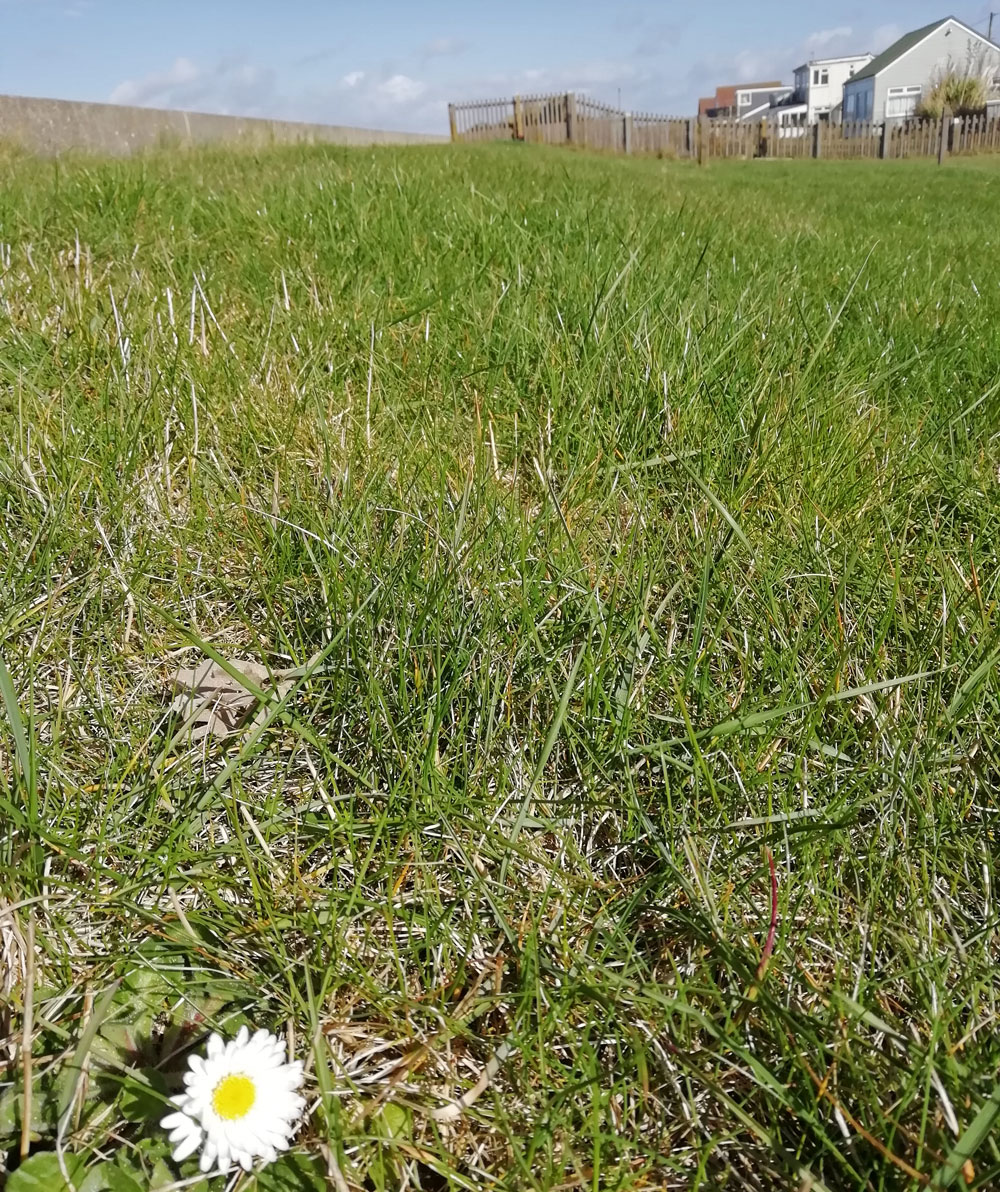
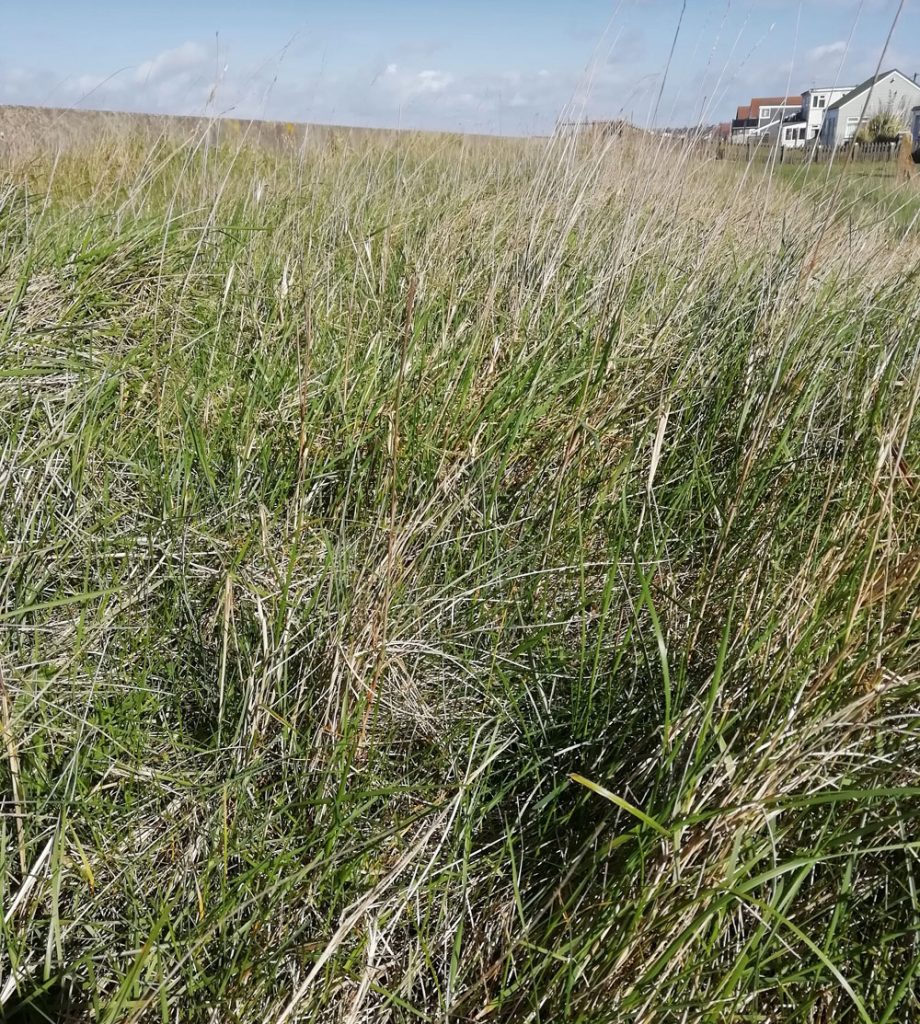
I took these photos of three neighbouring plots in spring 2024. (The wall at the back is the concrete sea defense wall).
The first plot is how most of the property owners manage their grass – mown throughout the summer as a lawn.
The second plot has not been cut – re-wilded you might say, as a NO MOW plot.
The third plot is neither mown too much, nor is it mown too little; it is mown just right – a few times each year, selectively with a scythe.
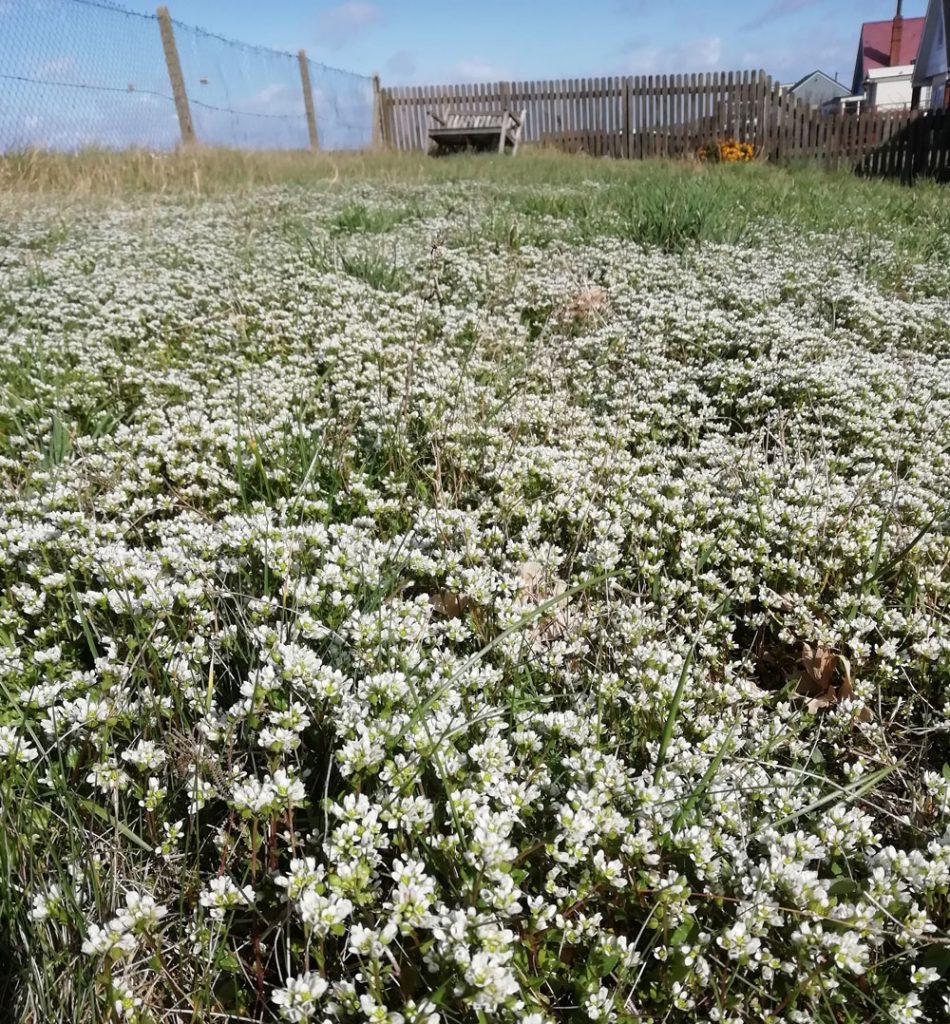
This is just one small demonstration of the transformational power of the scythe – or more precisely what is possible with a scythe in terms of good grassland management (mowing).
For a more detailed and nuanced ecological grassland management explanation, read on ….
Most significant is the fact that I do Mow.
No Mowing
Unproductive sites like this can be left as NO MOW uncut, (as in the second plot) and can go on to develop semi stable grassland vegetation that may not get ‘out of hand’ for years, until eventually scrub, bramble and sea buckthorn invade! This type of rough vegetation is a valuable refuge habitat, but floristically under this regime the grassland tends to become dominated by persistent long-lived grasses with much fewer flowering plants.
Managed Mowing
NO MOW rank grassland is not what I wanted to encourage on my plot as I felt I could do better with a scythe with cycles of mowing twice each year.
The ecological conditions here on top of a shingle bank (now fixed with a concrete sea defence wall) topped with wind-blown sand and salt, are a bit different to what you find on regular grassland. Even 100 meters inland on the reserve I manage behind these properties the grassland is different.
The soil is very dry in summer which restricts plant growth. It is nonetheless stable and productive enough to support grassland just with a different range of drought/salt tolerant coastal grasses and flowers like the pink flowered thrift pictured below.
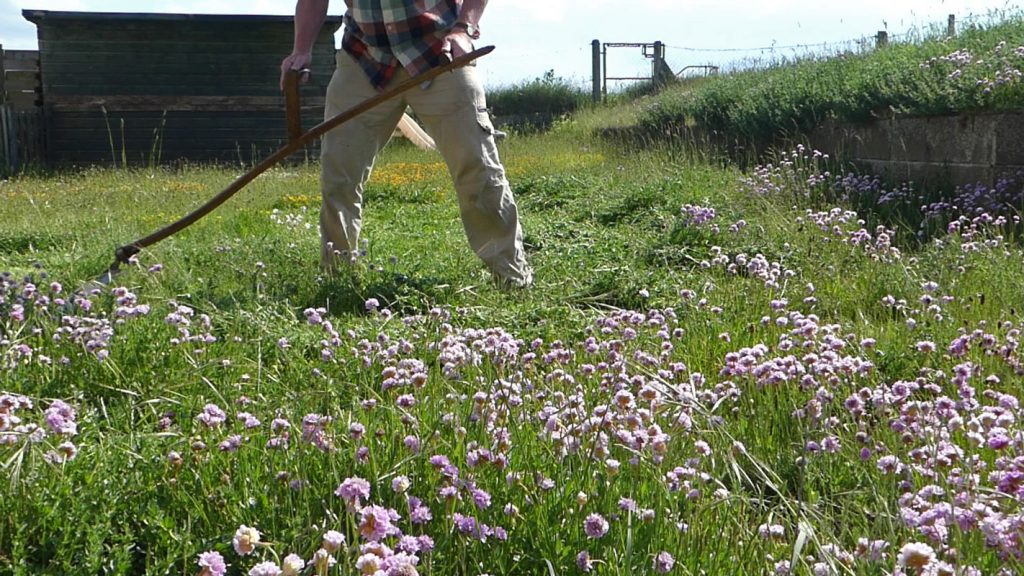
Low productivity means I have greater flexibility as to when to mow as there is no danger of the grassland becoming overstood and it will never collapse as lush vegetation does. As always, I make decisions as which sections to mow and when based on the plant types growing in each individual spot. The scythe gives the power to be selective in this way, stroke by stroke.
I have some sections of comparatively lush restharrow: a pink legume which is deep rooted and nitrogen fixing. I mow this earliest after flowering (July) to contain it. Legumes like restharrow leak supplies of nitrogen into the soil; this in turn has encouraged the growth of cocksfoot which I do not want to let grow unrestricted.
The back of the strip I don’t mow until the end of the season as I have late flowering sea holly and toadflax growing here.
Lawn Mowing
The same area mown regularly through the summer as lawn (as in the first photo) will support a more restricted range of shorter flowers and fine grasses.
In truth, given the particular low nutrient coastal sandy soil, many of the neighbouring lawns do support an interesting range of short growing plants like Bellis daisy, coastal clover species and particularly good summer carpets of birdsfoot trefoil (provided the owners do not hammer it too much with their mower, and do not add fertiliser, water or weed killer – which to be fair most don’t).
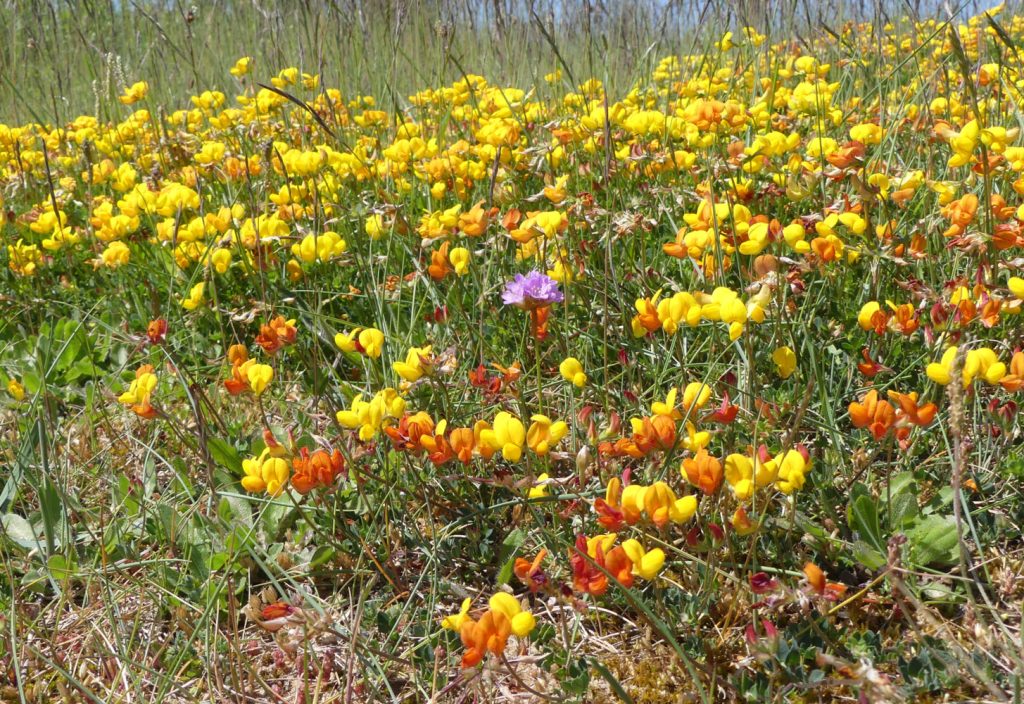
I do have one patch of grass I mow more often to mimic this. This gives me an area to sit out on, I get more birdsfoot trefoil here (which is one of my favourite plants and good for blue butterflies). These short swards and bare soil on warm sandy soils can also be good habitat for ants and solitary bees.
SUMMARY
There is not really one fix that suits all. A patchwork mosaic of different structures and plants is what overall delivers the best returns. The scythe however is absolutely the best tool in providing the power to facilitate this enrichment.