
The most frequently asked questions I get when out promoting wild flowers, meadows and scything relate to when to mow; and even whether it is necessary to mow meadows and grassland at all.
The background to these questions is invariably one or both of firstly, not fully appreciating the key role of both mowing and grazing in grassland ecology; and secondly anxiety as to whether indeed they should mow at all.

Scythes are historically what first gave rise to flower rich meadows, and I believe offer the key to understanding and managing these special habitats. The single most common cause of failure or disappointment with flower rich grassland in my 40 years’ experience is a failure to mow enough and at the right time. This is the reason I took up scything.
An unfortunate ‘no mow’ anxiety has grown in recent years fed by popular NO MOW and REWILDING philosophies spreading across media platforms. The unintended consequence of this messaging is some confusion and uncertainty as to how best to manage grassland.
Meadows are important, but as one of a suite of other habitats that are important for wildlife and diversity. I believe these questions and anxieties can be reconciled by a mosaic approach embracing many diverse strategies simultaneously aimed at creating the most diverse mosaic of different habitats on both a local and wider landscape scale.
Habitat Mowsaics
To emphasize the essential role of mowing in grassland management, and as antidote to ‘no mow anxiety’ I have recently adopted the term ‘Mowsaic’ in my talks on grassland management. I want to put the ‘mow’ back into the concept of creating habitat mosaics.
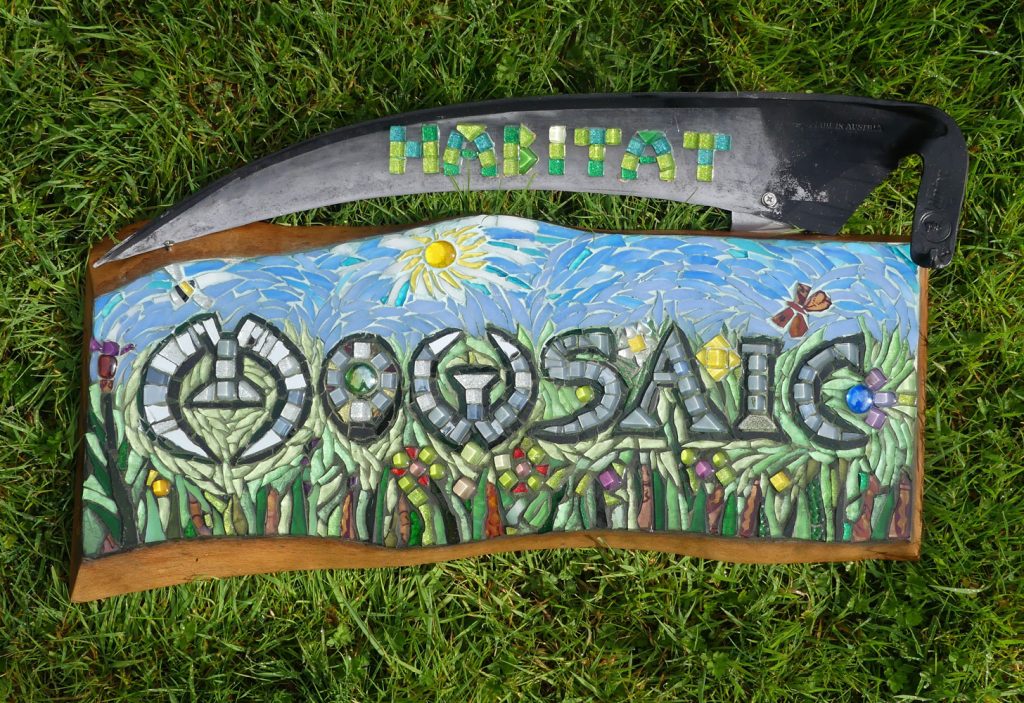
In my experience the best way to reconcile the many different the management strategies is to think about following as many as possible to create and maximise habitat mosaic both on a local scale and broader landscape scale.
On a simplistic level no one habitat type, and importantly no one management strategy, suits all species. In addition, more mobile animals and insects often require resources from more than one habitat type such as hedgerows to shelter and nest in, and flower rich meadows to feed in. They need to commute easily from one to another so connectivity is important too. It follows that the more diverse a range of connected habitats a site has the greater is the overall diversity it can support.
Grassland comes in many forms from continuously mown lawns and grazed pastures, to seasonally mown meadows, to rough grassland with scrub. Each different mowing or grazing regime produces a different habitat potential. None however are as are as potentially rich in flowering species diversity as meadow grassland which is mown in a seasonal cycle synchronised to the life cycle of flowering plants and the insects that use them. This is why I most strongly advocate for meadows.
This is not to suggest that all grassland should be uniformly managed as a meadow. On the contrary, adopting the Mowsaic philosophy means developing a mowsaic of them all: close mown/grazed turf (which is good for ants, ground nesting solitary bees and waxcap fungi); meadow grassland (an essential midsummer habitat resource for insects seeking pollen and nectar) and rough infrequently cut/grazed grassland as an overwintering refuge for small mammals and some insects.
Even within meadow grassland different cutting dates and grazing regimes will produce subtly different results so that mowing in sections over the season as a mowsaic will also increase overall diversity compared to mowing all the meadow on one specified day. There is no one ideal or ‘correct’ mowing date. The scythe is the perfect tool to exploit this as it offers individuals the flexibility and control to make this possible. As a bonus working in manageable sections through the season helps spreads the workload.
A mosaic approach has potential to deliver results which are greater than the sum of its parts. One of the best examples of this are Wood Meadows which are a dynamic intimate mosaic of both managed meadow grassland and woodland (which I have covered in a separate blog). On one Wood Meadow in Estonia, 76 species of plant per 1 square metre were counted, making it one of the world’s record sites for botanical diversity.
NO MOW?
It is an ecological fact of life that grassland cannot exist at all without mowing and or grazing. Abandoned grassland is quickly lost, turning by the process of succession into woodland. With the assistance of jays planting acorns, my own meadow and lawns would turn to closed woodland in under ten years if I were to stop mowing!
Estonian Wood meadows as mentioned above once covered 20% of Estonia. 95% of these have been lost in recent decades due to abandonment following changes in land use (no mowing). Most of these have become closed canopy secondary woodland. This massive habitat loss mirrors the scale of loss of species rich grassland in the UK and rest of Europe.
NO MOW MAY?
This initiative and slogan from Plantlife has proved very popular with gardeners and I applaud it for changing the established public perception that an uncut front lawn is an unacceptable indicator of neglect and laziness. The no mow campaign has helped promote the value of wildlife friendly flower rich grassland. It has been particularly good for promoting scythe sales when people adopting ‘no mow may’ find that their existing lawn mower cannot deal with the tall growth aftermath!
So, what is my gripe and why am I blaming this campaign slogan for contributing to ‘No Mow anxiety’?
The problem is not the campaign itself which Plantlife carefully and specifically targeted at domestic lawns and for the temporary period in May – it is the negative ‘No mow’ slogan.
Plantlife actually does give some very sound advice on adopting the concept and mowing! (including mow-saics). see https://www.plantlife.org.uk/everything-you-need-to-know-about-no-mow-may-and-the-no-mow-movement/
The issue as I see it is the unintended consequences arising from what people actually take and understand from the messaging, and what they choose to do with it.
The most fundamental thing I pick up from people and the media is that people have simplified the message: they forget the ‘May’ context and now believe that mowing is generally bad and should be avoided or delayed as far as possible. The result of this ‘no mow anxiety’ is that I find myself selling more scythes but having to spend more time offering counselling to their users that it is both OK and good to mow!
The other typical concern I hear from other conservation professionals is that some adoptees of ‘No Mow May’ “invite” pollinating insects into their garden with flowering lawns, then come 1st June blitz them all obliterating them with strimmers and even worse chemical sprays!
May Mowing
The slogan is also seemingly a bit prescriptive to the month of May. Here again a more positive flexible mowsaic approach is better, even including May mowing! for example:
- Keep pathways, edges and some areas close mown even through May. The ants will thank you as the absence of taller shading grass keeps the soil at the higher temperature they need. Your sceptical neighbours may also appreciate the intentional appearance conveyed by neat edges and paths.
- For many years I have myself adopted no mow June instead (I keep mowing my lawns into May). This produces a short flowering summer lawn that stands for longer without getting tall and rank. It favours short herbs like selfheal, lawn daisies and white clover which don’t thrive in lax cut or grazed swards. These plants can grow and flower in my lawn but not amongst the longer grass of my meadow.
- I often choose to cut back rough tussocky grassland in early May to keep it in balance and prevent invasion of brambles and scrub. To me May mowing seems ideal timing for tussocky grassland when needed (not necessarily every year). Sheltering overwintering insects and invertebrates in theses areas are most likely to have emerged by the beginning of May and moved out into the flower rich meadow I provide next door. Earlier winter or spring cutting of these areas would be bad as many insects hold back emerging until the meadows start to flower. A May cut gives time for tussocky grassland to regrow as refuge for the following winter (this type of coarse grassland is dominated by a few grasses and tall herbs, so plant diversity is not the priority here). From a practical scyther’s standpoint I also find rough grassland easiest to tackle at this time as the sward is a mix of old dead stalks weakened by winter decay and weathering, and fresh succulent spring growth.
- Cow Parsley. To prevent this spreading by seed from the margins into the meadow I cut it back immediately after flowering and before seed set. Typically, this is at the end of May. I enjoy the billowing white May bonanza, as do pollinating insects like hoverflies which like flat topped umbels. But I prefer cow parsley to be an element of my mowsaic, not for it to take over the whole meadow (as it easily could).
The No Mow May slogan has been a great success but is open to misinterpretation. It needs additional education effort to support it, and a more nuanced holistic mowsaic application.
Wild flower meadows have become increasingly popular in gardens. I would prefer these were promoted more strongly over more limited value ‘no mow lawns’.
Less of the negative ‘no mow’ and more positive ‘mowsaic’ please!
REWILDING
No Mow May cannot take all the blame for ‘No Mow anxiety’. As I mentioned in my introduction the populist media interpretation of rewilding I believe also feeds this anxiety. Again, this is understandable from an over simplistic world view that the problems of our planet are largely manmade (which they currently are) and so the answer is to remove humans from the equation – so no mowing.
Rewilding has developed into a massive movement worldwide with many different more nuanced and realistic approaches and philosophies. It has come to mean different things to different people and in different countries. These are too complex to go into here, so instead I will pull out a few key points I feel relevant to this NO MOW discussion.
Rewilding is best understood as a process rather than a set goal with an end point – such as returning to some imagined prehistoric Pleistocene idyll before humans. It is the journey not the destination that matters.
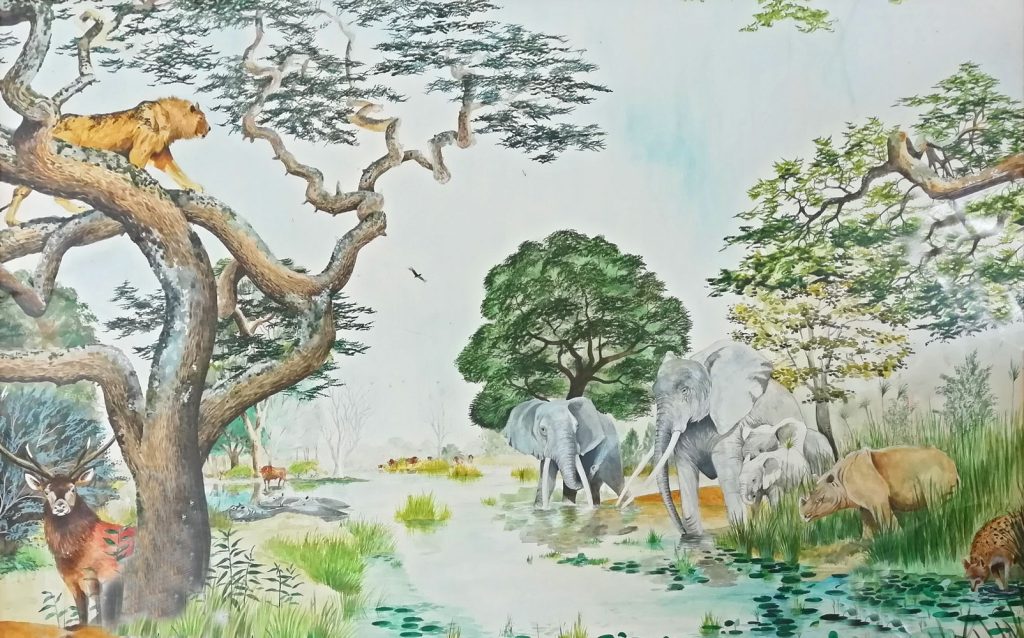
At its core rewilding aims to hand back control to nature to restore damaged ecosystems with a minimum of human intervention. In many ways this is just a trendy rebranding or new branch of the established field of Ecological Restoration. The concept of Ecological Restoration began back in the 1930s and can be defined as ‘the process of assisting the recovery of an ecosystem that has been degraded, damaged, or destroyed’
The difference, if any, is in emphasis. In my own work in this field (restoring flower rich grasslands), I have always believed that working with nature in the driving seat was also a fundamental principle, and believe pragmatically that success comes from following and facilitating, in partnership with nature, patterns that already exist and that have arrived by natural ecological processes.
Rewilding claims not to look back at these pattens as reference just leave nature to ‘do its thing’. In practice I see most rewilding schemes extensively reference the past, with great emphasis on extinct iconic species like beavers and lynx, and attempts to genetically engineer aurochs back from extinction.
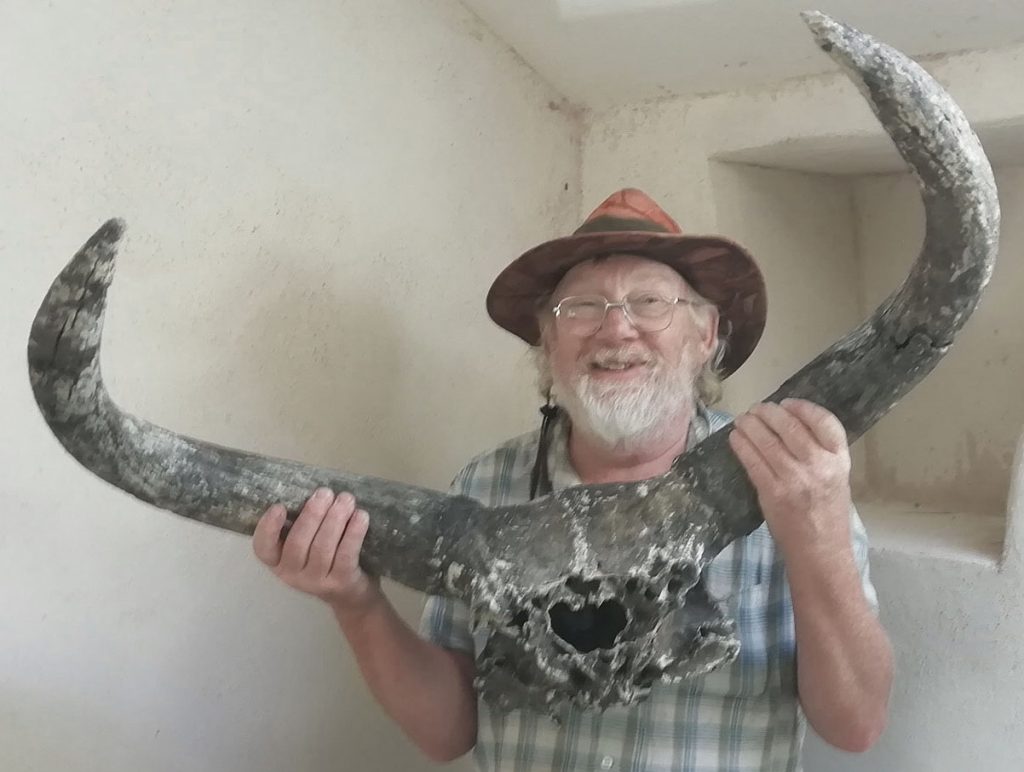
I am wondering if it contains some usable DNA?
As well as reintroduction of chosen species most rewilding schemes in practice seem to involve significant input and control by humans on the ground. One of the first steps of the Ken Hill Rewilding scheme I observed on my doorstep here in Norfolk was to erect a massive 15km perimeter fence and boundary ditch (to ‘manage’ beavers I believe). Knepp spent a lot of tax payers grant money on fencing too!
Within Rewilding there is much talk about reintroducing so called ‘keystone species’ which potentially deliver big effects on the environment. In the UK beavers are the most fashionable must have accessory for any attention seeking rewilding scheme. I don’t dispute what beavers can bring to naturalise watercourses and by their river engineering alleviate flooding risks. But what I think this focus misses is the elephant in the room: humans. Humans replaced the elephant, other megafauna and top predators way back in the late-Pleistocene to become the most significant keystone species ever.
This is the situation we inherit. Ok so we can’t fail to recognise that humans have abused their position as keystone species making it awkward to talk about human influence and role in positive terms alongside the extinct animals we persecuted in the past. But to exclude the role of humans in the ecological restoration of our country and planet is neither helpful or practical. To be fair as the Rewilding concept is maturing it is getting more realistic and pragmatic. The first listed principle from the charity ‘Rewilding Britain’ is now to “Support people and nature together”.
The notion that most grasslands derive from human management and as such are essentially degraded former woodlands only suitable for reforestation or rewilding is actually threatening to native grassland ecosystems and biodiversity worldwide.
A Habitats Directive of the European Union recognises the high conservation of some 63 habitats of exceptional biodiversity which depend on use and maintenance work by people, mostly based onlow-intensity traditional farming. This of course includes meadows which by definition are mown grassland – originally by scythe. These semi-natural man-made habitats can be an important contributor to overall diversity on a landscape scale. They even sometimes have the potential to exceed the biodiversity potential of purely wild systems as with my wood meadow example given earlier.
Conclusions
With this article I am really not knocking one approach in favour of others, just seeking a more holistic inclusive view. I have tried to argue that a multiplicity of approaches to ecological restoration are valid. This includes an undeniable role for humans as keystone species with the specific example of traditional mowing with scythes to maintain flower rich meadows.
The most significant outcomes for ecosystem functioning and biodiversity do not come from following a single narrow doctrine or suite of options but by facilitating the development of a complex interlinked mosaic of different habitats. As well as this most diverse approach by default delivering the most diverse outcomes, it hedges our ecological bets. With this approach we can still progress with our incomplete understanding of all the complex ecological processes in play. We do not need to debate and speculate what past pristine Pleistocene landscapes looked like, and we can hope to future proof our environment for the effects of climate change without knowing what the future holds.
Whether you are talking about hectares or just a few square metres, the Mowsaic approach has positive impact. Apart from the obvious benefits to flora and fauna, it performs an even more task, it raises awareness.
Thanks Richard
Bravo Richard! Thank you so much for writing this. More ammunition in my arsenal against the “single species” conservationists.
This is an inspiring piece.
When I grow up I also want a little meadow to call my own. Any day now!
I am always saying how scythes created meadows originally – but it seems having a scythe also creates a need to have a meadow!