
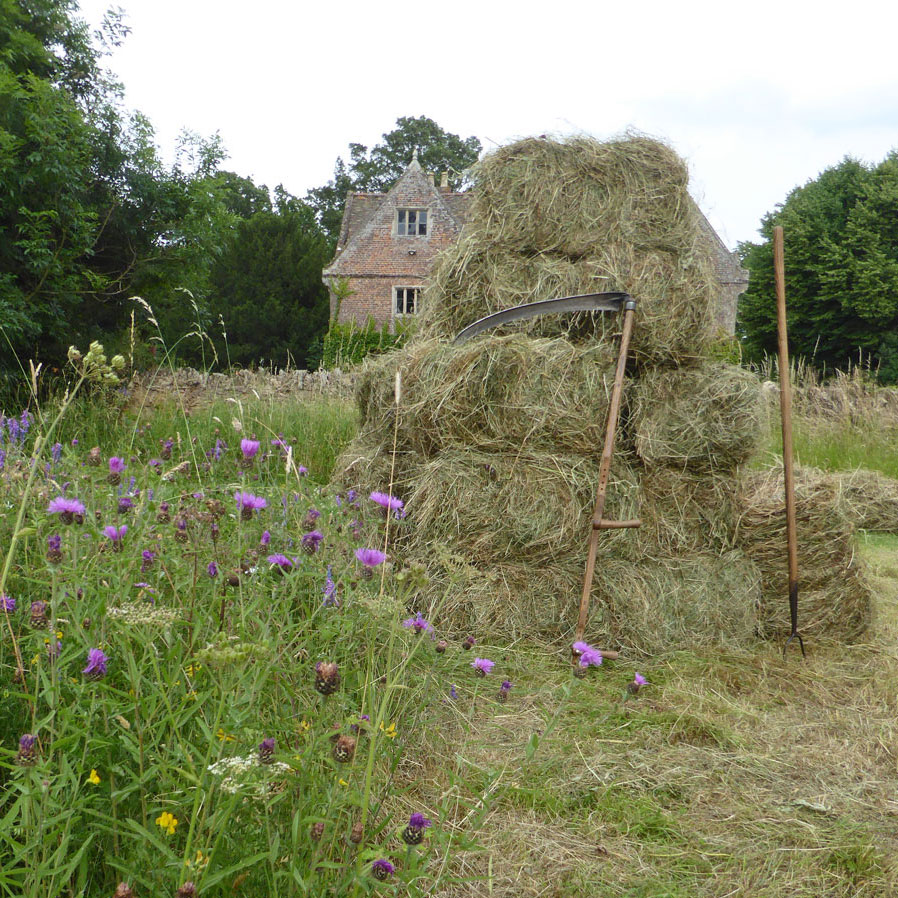
Meadows owe their special character and particularly rich diversity to the regular seasonal cycle of growth, mowing and grazing.
For meadows the defining event of the year is the summer “hay cut” which follows an earlier period of unrestricted growth and flowering through May and June. During this late spring/early summer period the meadow is closed and left undisturbed by either mowing or grazing.
In the best meadows all these elements are synchronised in harmony with the seasons.
In spring the plants utilise the abundance of both warmth and moisture to grow away at their maximum potential.
In early summer, drier sunny conditions and longer days signal the best opportunity of the year for plants to complete their life cycle: to burst into flower and set seed before lack of moisture in high summer becomes limiting to further growth and development.
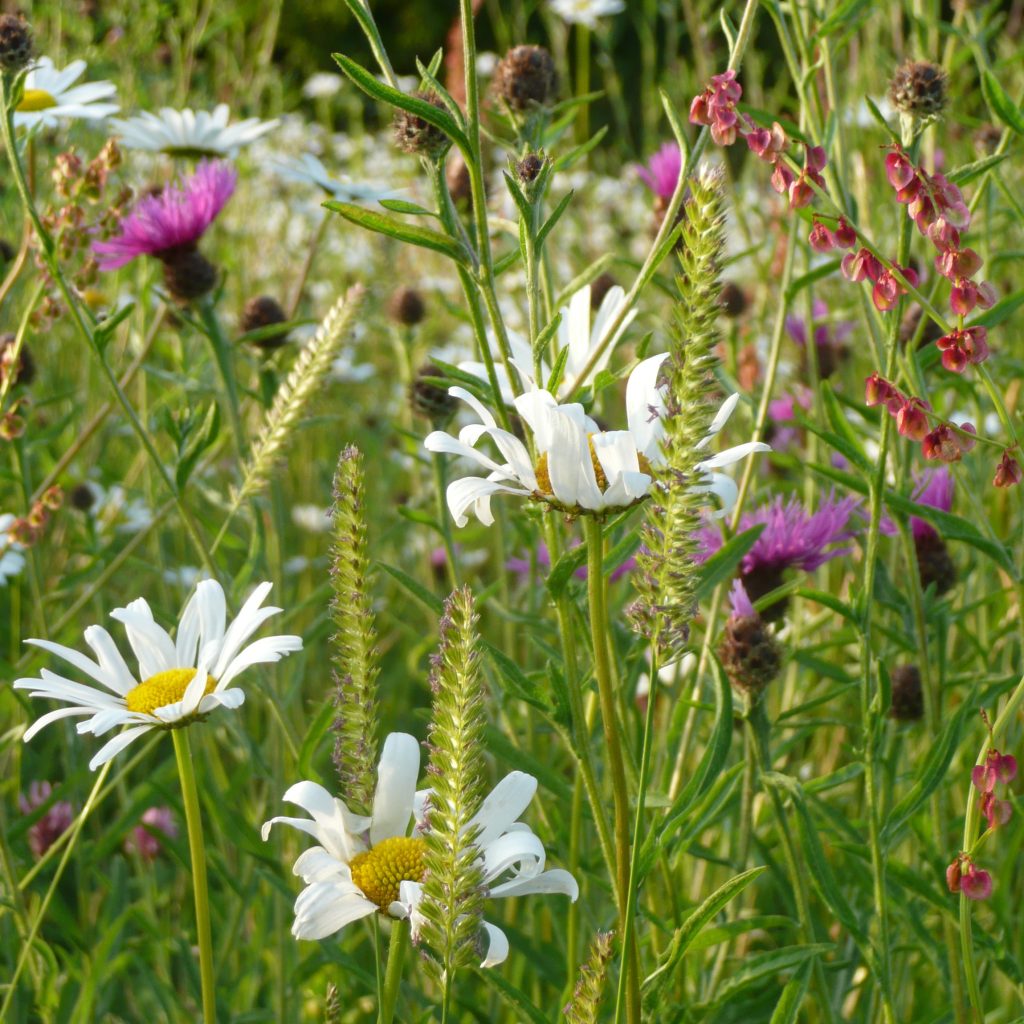
By midsummer meadow grassland reaches its peak of growth, condition and development. If left beyond this point it goes into decline, seed is shed and the plants die back, and on fertile ground collapse and decay.
Both flowering plants and their pollinating insects have coevolved to exploit together this optimal once-a-year window of opportunity. This timing synchronises both the peak abundance of pollen and nectar and the best weather for flying insects .
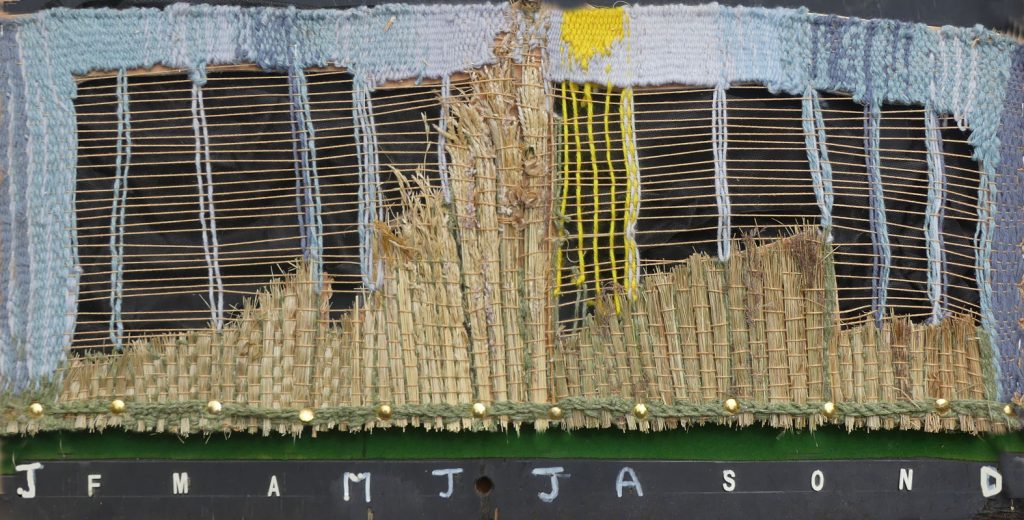
Traditional farming of meadows also recognises this seasonal optimum and, as with pollinating insects, farmers synchronise their calendar around the opportunity to take a hay crop.
Farmers closing the meadow to grazing allows the plants to really flourish without disturbance. The timely cutting and removal of a hay crop in midsummer prevents the grassland plant community from going into decline. Instead, mowing and hay removal promotes its rejuvenation by opening it up, stimulating fresh growth and resetting the balance between different grasses and herbs.
Timing of the summer hay cut
In the simple case of a farming calendar the decision as to when to cut for hay is fairly straightforward.
- Wait for the midsummer peak accumulation of growth of high nutritional value.
- Make hay whilst the sun shines.
When adding in wildlife value to the timing decisions a number of apparently conflicting interests (like nesting birds or pollinating insects) arise that potentially change the view as to the best time for the main hay cut.
Unfortunately, delayed cutting or procrastination in the current season for the perceived short-term benefit of birds or insects can lead to a long-term decline, even a crash in the habitat quality of the meadow. This can mean that in following years the same birds and insects have a much damaged or absent habit resource to return to.
The answer to this apparent conundrum is firstly to understand the fundamental importance of mowing to flower rich meadow habitats. Secondly do not get fixated on one “correct” cutting date as no one system suits all interests.
Instead adopt a mowsaic of different mowing strategies to get the greatest overall benefit and diversity.
Elements of Mowsaic mowing strategy

Early hay cutting commencing in late June produces the best hay feed quality with optimum sugar and mineral content. Hay removal at this optimum time also means the maximum harvest of nutrients from site which may be important in the longer term for the fertility balance of the soil. However early cutting brings a premature end to enjoyment of the flowers and can compromise nesting birds which don’t fledge until late July, as well as insects and other wildlife using the meadow.
Mowing a meadow in sections at different dates prolongs the overall flowering season and gives wildlife a chance to move aside. Start by cutting lush areas where nutrient removal will be of most benefit. Areas with dense, lush or laid vegetation are also likely to be the least attractive to nesting birds.
Mid-summer hay cutting. The period from July into early August is generally the best time for mowing meadows for both wildlife and practical hay making considerations. Evidence suggests that this is the optimum time for maintaining floral diversity. If mowing in sections over time, as I would advise, aim to cut the biggest proportion of the meadow during this period.
Late hay cutting in August and September when the meadow is ‘over-stood’ is more difficult as the plant stems become dry and tough and on fertile soil collapse into a dead smothering blanket.
Grassland which is consistently cut late in the season year on year also loses species diversity as late cutting gives more time for coarse grasses and other dominant plants to grow unchecked. Whilst in the short-term later cutting may avoid any disturbance to birds and insects, in the long term the richness of the meadow as a source of pollen and nectar is lost, also the coarse structure of the sward becomes less attractive to breeding birds. Again, varying the mowing times both within the meadow and from year to year is the best way to maintain a diverse balanced sward.
Thin open swards, that stand well and retain interest, can be left longer than dense or collapsing vegetation. If the grass collapses because it is too lush or because of bad weather a hay cut needs to be taken sooner (this is most likely with young swards on fertile soils). With the exception of yellow rattle (which seeds early) most meadow species are perennial and do not need to set seed each year – some species will last indefinitely in a meadow without ever setting seed.
Haytime summary
To maintain maximum diversity and flowering interest, mow the meadow in sections at different times from late June to the end of August.
Do not cut meadows in May or early June as you might disturb nesting birds.
Optimum haytime mowing is not one set date but a season of mowing centered around July.
To maintain flowering interest and balance it is best to complete main hay cutting by the end of August.
Parts of the meadow may be left occasionally (one year in three in rotation) into September so that late flowering species can seed.
Leave some patches or edges to your grassland which are uncut through winter to provide winter refuge for insects.
Practical Haytime Tips
Meadow growth should be cut back to a height of 40-75mm.
The cut grass should be dried on site, turning it to assist drying and to disperse seeds. Drying also significantly reduces the weight and bulk of material to be removed.
The dried ‘hay’ should be removed within 7 days of cutting.
On larger areas it may be practical to cut and bale quality hay. Where hay making is impractical, arisings may be composted or heaped in habitat mounds on sacrificial parts of a site, where, if you are very lucky, they could provide habitat for breeding grass snakes!
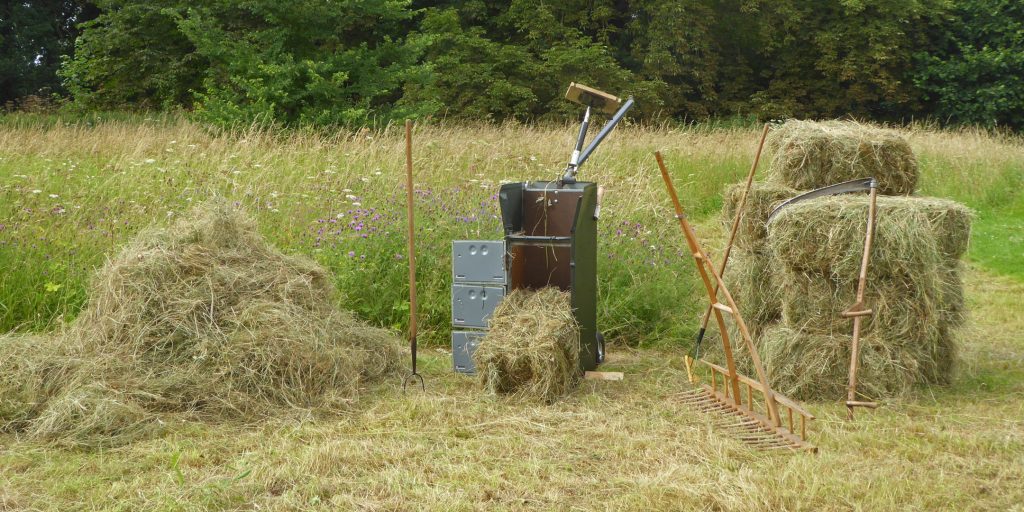
Hay Yield A meadow will yield 2 – 8 tonnes of dry hay per hectare (0.2 – 0.8 kg/m2) A 250m2 (tennis court size) meadow will produce about 5 x 25kg hay bales (typical small square type).