
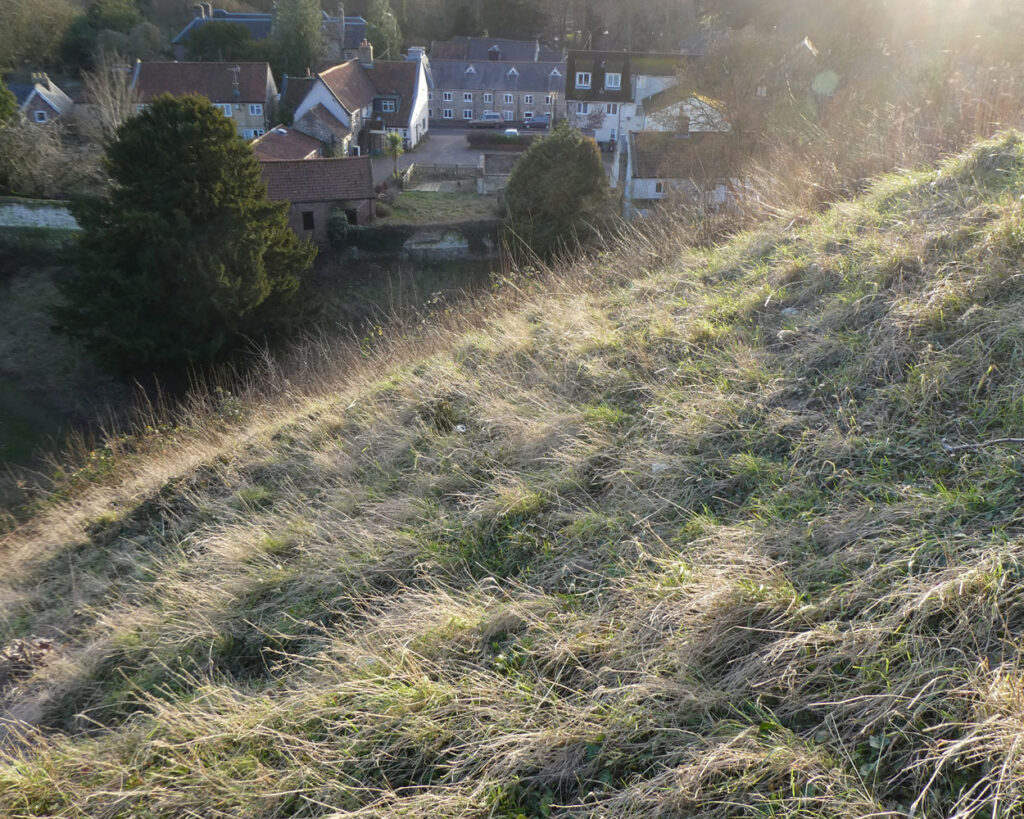
A large number of meadow owners leave cutting their meadows far too late; cutting them back only at the last moment in the autumn. In my recent experience, this is particularly true of “no mow May” meadows as inspired by advice from Plantlife. With this campaign the message to stop mowing in May was clear, but advice as to how and when to resume cutting was not. Delayed mowing is often the result of people’s concern to leave it uncut as long as possible for insects, and so flowers can shed their seed.
Consequences of late mowing
Meadows which are not cut around the optimum haytime in midsummer (around July) are described as being ‘over-stood’. In this phase the grass and herbs shed their seeds to the ground, draw down any remaining nutrients from the upper foliage into their roots. A large part of the upper growth dies back, ultimately collapsing in a tangled blanket that then rots from the base up.
Coarse competitive weeds and grasses have the power to punch through this dead blanket, but shorter more delicate plants will be smothered out of existence. So, the actual result is that any short-term benefit to insects and other wildlife is more than wiped out by the long-term damage to the meadow as a valued habitat resource for future years.
As Shakespeare put it
Wanting the scythe, all uncorrected, rank
Conceives by idleness, and nothing teems
But hateful docks, rough thistles, keksies, burs,
Losing both beauty and utility.
From a purely practical standpoint overstood meadows and grassland are not the easiest mowing, as anyone who finds themselves in this predicament will testify. They can be a scyther’s nightmare (and even machines might baulk at it).
Restorative mowing
So what to do if, for whatever reason, you find yourself in this position? What is the best strategy for the restoration and recovery of your meadow?
Mow it asap! It will be slow going and awkward, but persist: cut and remove the arisings as soon as you can.
Use a tougher ditch blade if this helps. Follow the direction the grass is lying (with stems folded away from you), which ever way that takes you. Take smaller bites: nibble your way through tougher sections. Feed the toe of your blade under any laid stems. As always, slice, and keep the blade down. Don’t be tempted to resort to hacking as in such tough conditions this hacking is likely to result in damage to your scythe. Don’t expect a tidy finish.
Future resolution
If you have time left in the growing season, let it regrow a bit, then cut it again. Plan to cut it yet again in the spring.
Finally, and most importantly resolve to avoid getting in this mess next year: start your main hay cutting much earlier in future!
Footnote: Discussion in this post relates specifically to regularly managed grassland: meadows, and lawns let to grow as meadows. Infrequently cut rough and tussocky grassland left overwinter as a winter refuge for insects and wildlife is a separate topic that I will cover in a separate post.
Very interesting information, thanks. I did some scything of a small area of grass in our city last weekend (group conservation work supported by Avon Wildlife Trust). Much of the grass was lying on the ground and going brown at the base. I didn’t think anything of it. I also thought later was better, but now you are making me think again. (By the way, could you put dates on your blog posts, please ?)
Hi there, as a newbie I’m just wondering: if the main hay cut needs to happen in July, how can more delicate wildflowers establish (including yellow rattle), if they’re still in flower and haven’t set seed yet?
Also, due to climate change, the grass just keeps growing well into autumn, making a second cut a necessity. Would September be the right time for this and then another cut in March? If the grass keeps growing during the winter months, will I just keep cutting it (or mowing it with a lawn mower)? Thanks.
Yellow rattle is adapted to set its seed around traditional ‘haytime’ in July – hence its other name hay-rattle. The haymaking process helps spread the seed about. This is true for many other meadow species of grasses and flowers. Yellow rattle and other delicate plants will struggle to survive in matted overstood grassland.
Meadow grassland is mown for hay midsummer and the aftermath* grazed with livestock (*see my blog on this). The more growth you get the more you need to cut to maintain balance – one cut a year is not enough on most soils.
Great blog Richard. Thank you. I arrived here because I searched for ‘overstood grass’ as I’ve been asked to help now a neglected bank.
I love the previous comment asking for the date. Your blog could be from 1599.
Hi Mary, I chose not to date my posts as most are timeless in the sense that they are not ‘latest news’ but contain general topic information and advice that does not date or change over time. If there is a part of my post that references a specific event I mention this within the post. If the information becomes out of date I update or replace the post. None of my posts are from 1599 but may reference this and earlier scythe epochs.
Exactly – overstood grass, sweet hay, bees, thistles are all timeless!